The note writes itself.
The claim is checked before it's sent.
Hecure turns the visit conversation into a draft note for the physician to review, and flags weak documentation and coding errors before the claim is built. In Arabic and English.
MVP · NPHIES submission simulated · Preparing Riyadh pilotsDesigned for NPHIES and PDPL — not yet integrated or certified Physician approval is required before any claim Arabic and English
Catch weak documentation before the claim is built
The physician reviews the note, and Hecure shows what needs completing before the claim is built.


The problem
Time slips away. Money never arrives.
Time
Doctors document instead of caring for patients
Part of every consultation goes to writing the note — by hand or on screen — during the visit, between visits, and after hours. Documentation is a tax on clinical time.
Money
Documentation gaps put claims at risk
Missing documentation and coding gaps can lead to denied or delayed claims — and may only surface after submission, when fixing them means rework, resubmission or appeal.
How it works
Four steps, inside the medical visit
Record the visit
Once the patient's consent is recorded, Hecure transcribes the visit in Arabic and English. The raw audio is then deleted from Hecure's server.
The note writes itself
Hecure drafts a SOAP note linked to the visit transcript where possible. The physician reviews, corrects and approves it.
Hecure suggests possible diagnoses
Hecure shows possible diagnoses with their evidence from the conversation. They are suggestions; the physician alone decides.
Hecure checks the claim before it's built
The clinic team reviews and confirms the suggested codes. Hecure then flags weak documentation and coding errors before the claim is built.
Arabic is not a translation layer
- The doctor and the patient speak as they normally would — in Arabic, English, or both. The note is drafted in the language set for the clinic, or in the visit's main language.
See Hecure
From conversation to note and claim checks
Hecure links parts of the note and the claim to what was said or recorded in the visit, so a reviewer can check where each came from. That link is the product.
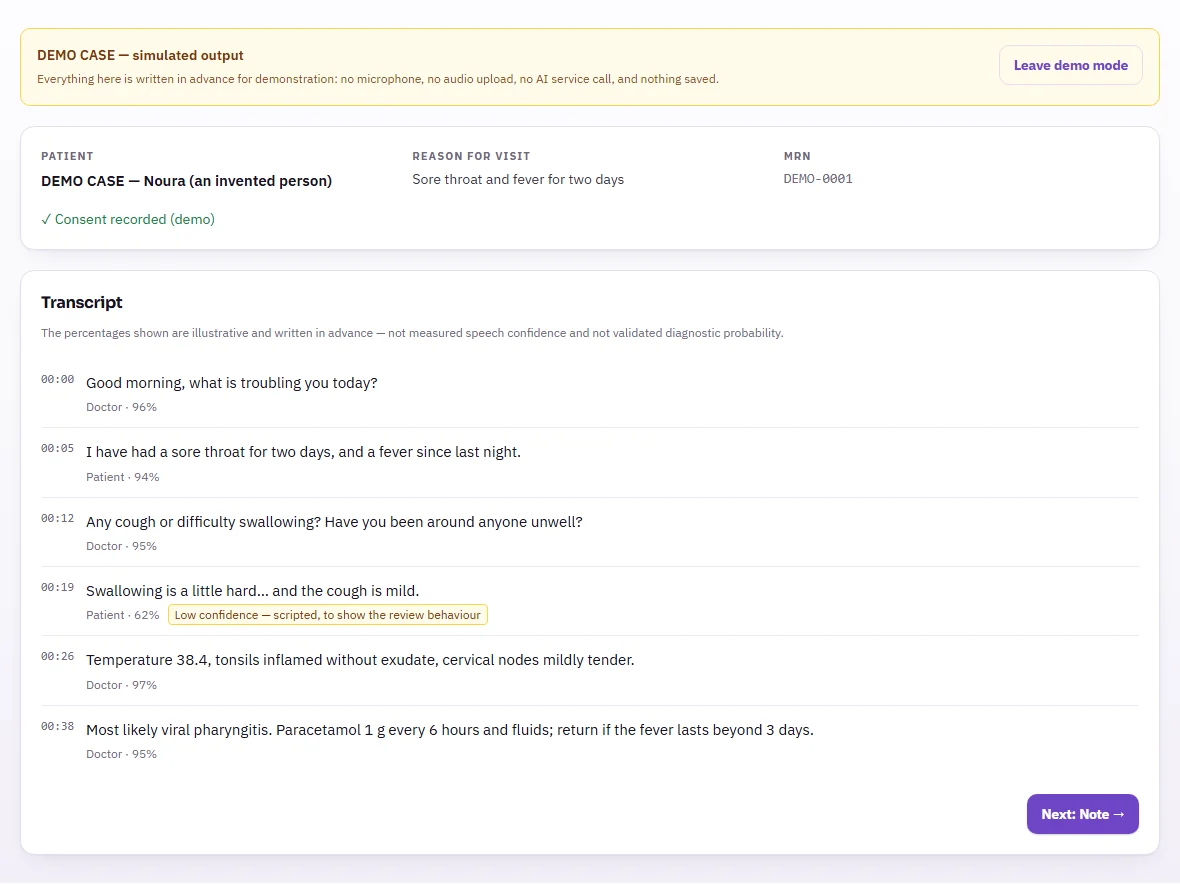
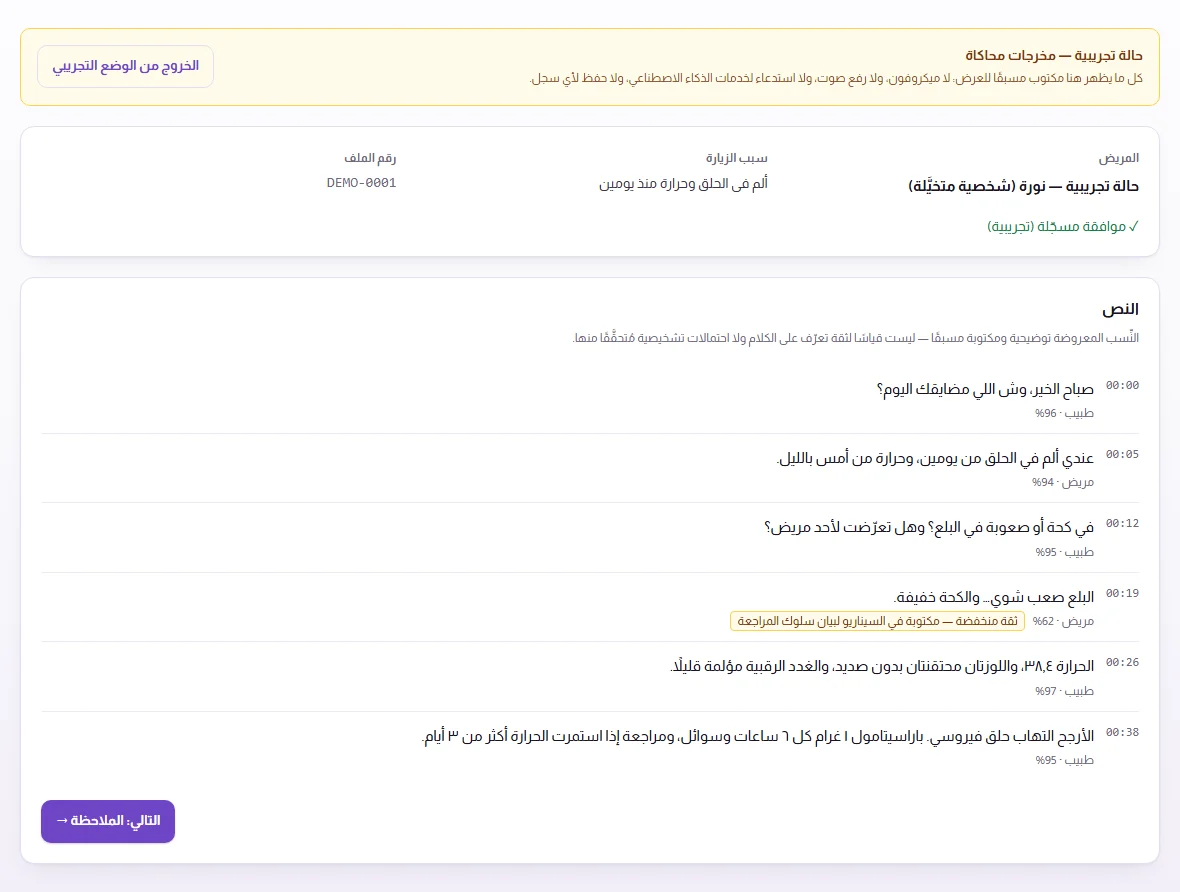
The conversation in writing, with speaker and time, for the physician to review.
In this screen: the line at 00:19 is flagged as low confidence, so the physician checks it.
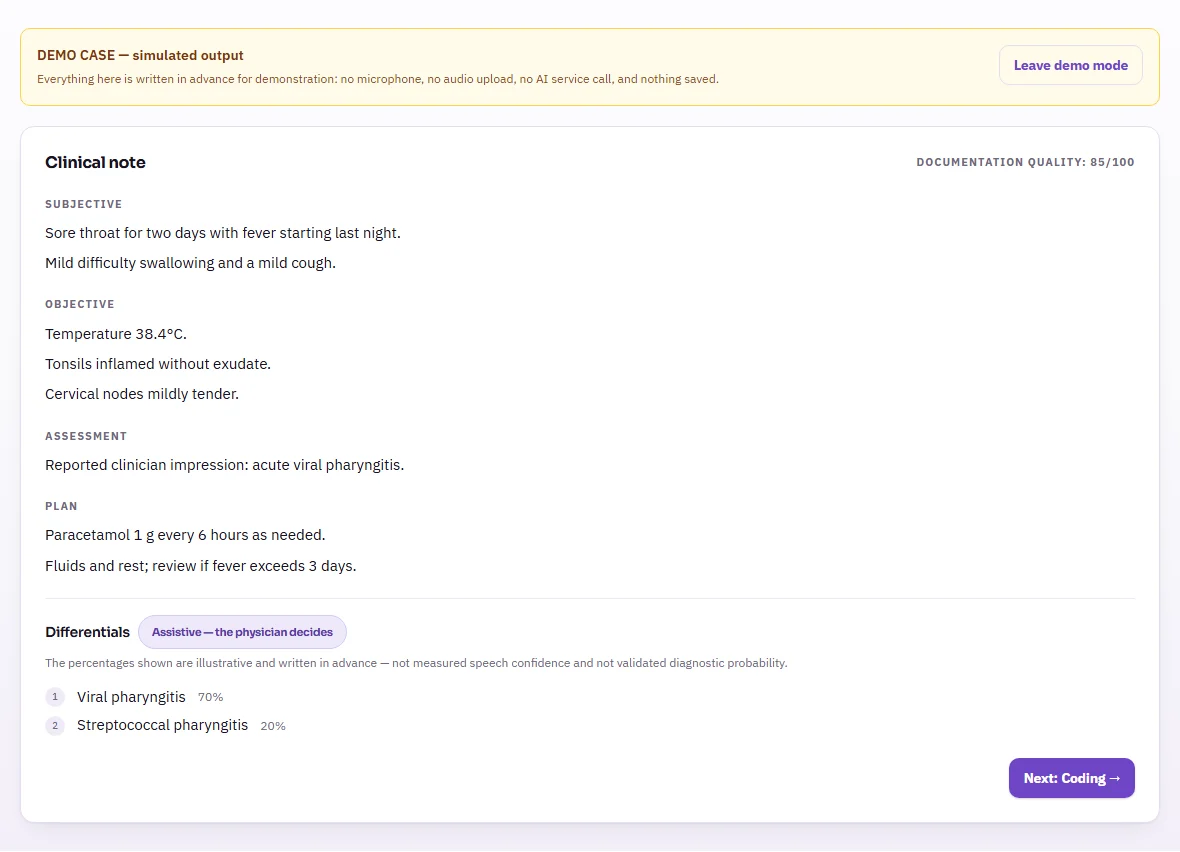
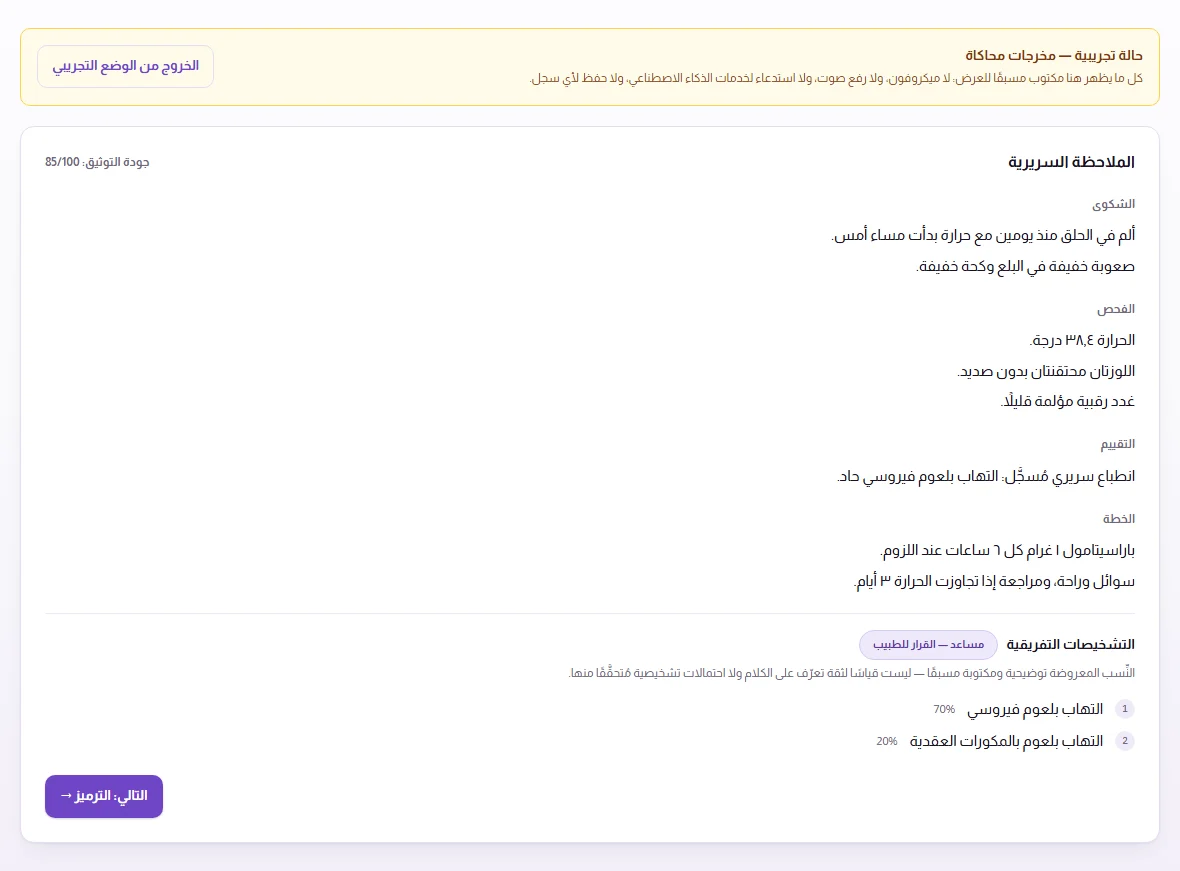
A SOAP draft the physician reviews, corrects and approves.
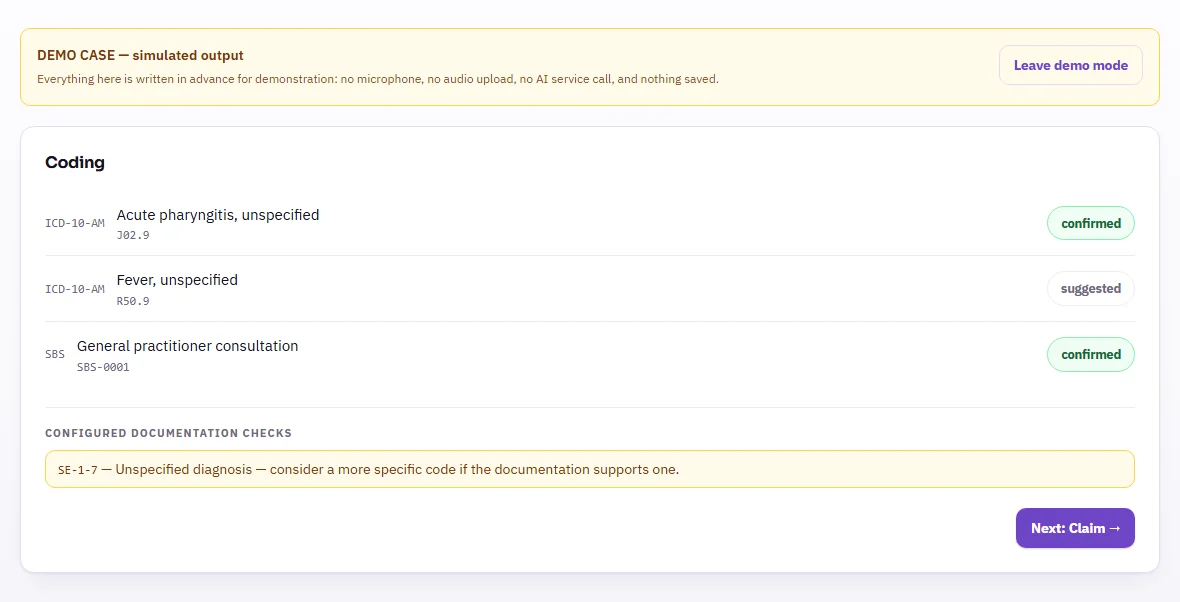
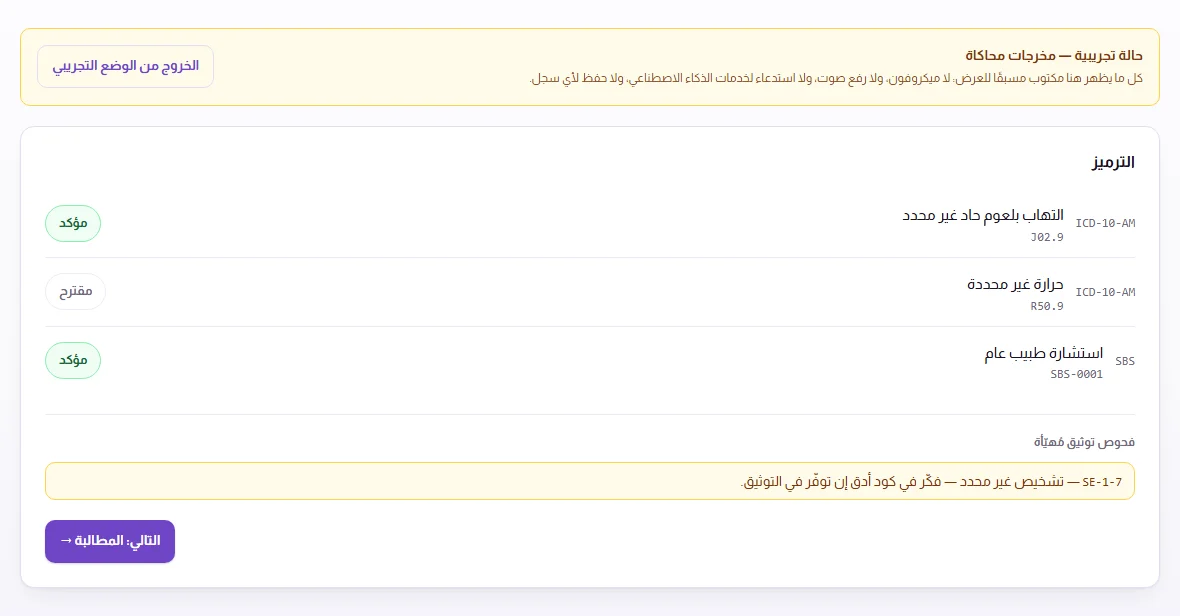
Codes the user confirms, and checks that look for documentation gaps and coding errors.
In this screen: the yellow SE-1-7 alert is a documentation check flagging an unspecified diagnosis.
A test claim built from the reviewed information; NPHIES submission is still simulated.
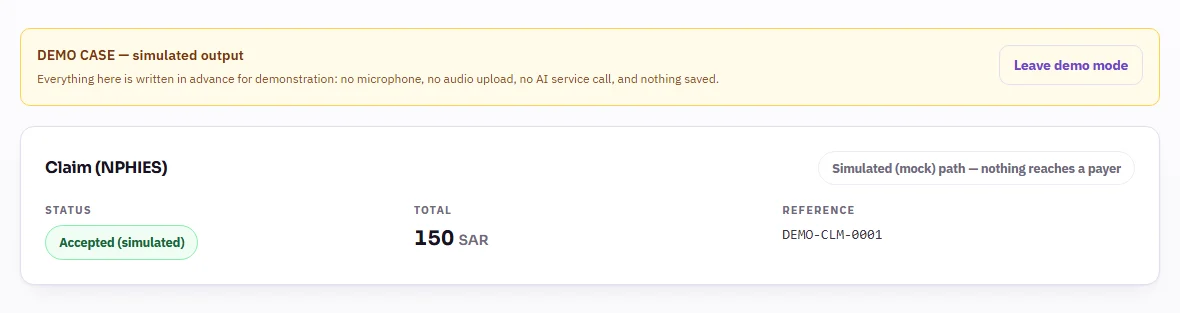
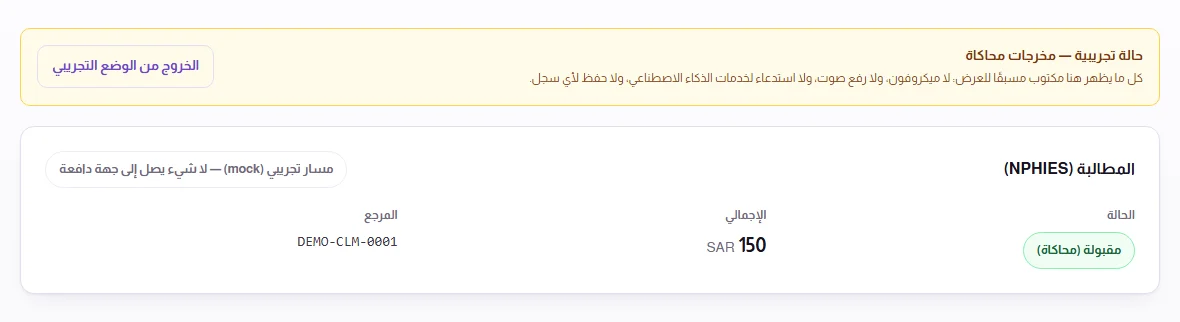
Real application screens using a fictional case. This is a screenshot walkthrough; claim submission to NPHIES is simulated.
Request a pilotFrom documentation to claim readiness
Clearer documentation, a claim that's more ready
Hecure checks the recorded information and shows specific alerts for what needs reviewing or completing.
Documentation and coding checks
-
Procedure indication
What is checkedThe conversation and the note, for signs that document why the procedure was done.
If none are foundAn alert to review and document the reason for the procedure, such as an ECG.
-
Vital signs documentation
What is checkedThe examination section of the note, for signs that vital signs were recorded.
If none are foundAn alert for the physician to review the documentation and complete it if needed.
-
Previous visits
What is checkedVisits recorded in Hecure for the same patient within 14 days.
If a confirmed diagnosis code matchesAn alert for the team to review how the visit is billed.
These are initial checks for specific cases of weak documentation and coding errors, and they need the user's review. They do not guarantee the claim will be accepted.
Check details and limits
- The procedure-indication check looks for specific words and signs; it does not fully assess whether the medical justification is sufficient.
- The vital-signs check does not verify that every measurement is recorded or that the values are correct.
- The previous-visits check uses Hecure's own records only; it does not search external records.
Related NPHIES denial-reason codes:
MN-1-1Procedure indicationSE-1-1Vital signs documentationCV-1-9Previous visits
The NPHIES adjudication-reason list (opens in a new tab)
Linking these alerts to the denial-reason codes NPHIES publishes does not mean NPHIES has approved the checks, or that Hecure is integrated with it.
Review and privacy
The physician decides, and data handling is clear
Controls that help the physician review the output, and a clear account of how recordings and data are handled in the prototype.
The physician reviews and approves
Hecure drafts the note and suggests diagnoses. The physician reviews the content and approves it before the claim is built.
Go back to the source
Parts of the note link to their place in the visit transcript where available, to make review easier. A reference does not replace checking that the content is correct.
Recording starts with consent
The patient's consent is recorded before recording starts. After transcription, the raw audio is deleted from Hecure's server; transcription is done by an external provider.
How recordings are handledWhere does the prototype stand today?
Hecure currently uses external providers for transcription and note drafting. Keeping data inside the Kingdom and verifying PDPL requirements are still part of the pilot plan.
Audio is deleted from Hecure's server only. What the external providers retain is governed by their own terms.
Technical controls
- Selected identifying fields are encrypted: name, medical-record number, ID number and phone.
- A chained audit log of actions, which helps detect tampering.
Output controls
Every note-drafting call carries a clinical rule set. Three of those rules are enforced in the code itself, not left to the model.
- A cap of five differentials No more than five, and each one is classified: possible, reported, or assumption. Anything beyond the cap is discarded before the note is written.
- Evidence references are validated Every reference the model returns is matched against the transcript. A reference with no matching segment is discarded.
- Lines without a real source are flagged Basic checks catch some unsupported content; they do not guarantee clinical accuracy. The physician reviews the note before approval.
Why Hecure was built
Documentation and the claim start in the same visit
I built Hecure because physicians spend part of their time documenting after each visit, and because weak documentation can lead to a medically sound claim being denied. Both start in the visit, so that is where Hecure starts.
Hussein Masheeb
Founder, Hecure
We are preparing our first clinic pilots in Riyadh. If you are a physician or run a healthcare facility, I would be glad to talk.
Pilot program
Give your time back to your patients
Tell us about your facility, and we will arrange a walkthrough with your team.
What happens after you send it
- We reply within two business days — we read every request ourselves.
- A short call to understand how your clinic works. No commitment.
- If it fits, we run the demo live with your own team.
How we charge
- The first pilot is free, so we can learn how your clinic works before any commitment.
- After the pilot, we agree pricing based on what we measured together during it, such as documentation per visit.
- We set the final pricing terms together with our first participating clinics.